TeardownNov 2026Solo project, published on PyPI
evalX
pytest for AI behaviour: golden datasets, code checks and an LLM judge, with a CI gate that fails if any single case gets worse.
- tests, CI green on every push
- 296
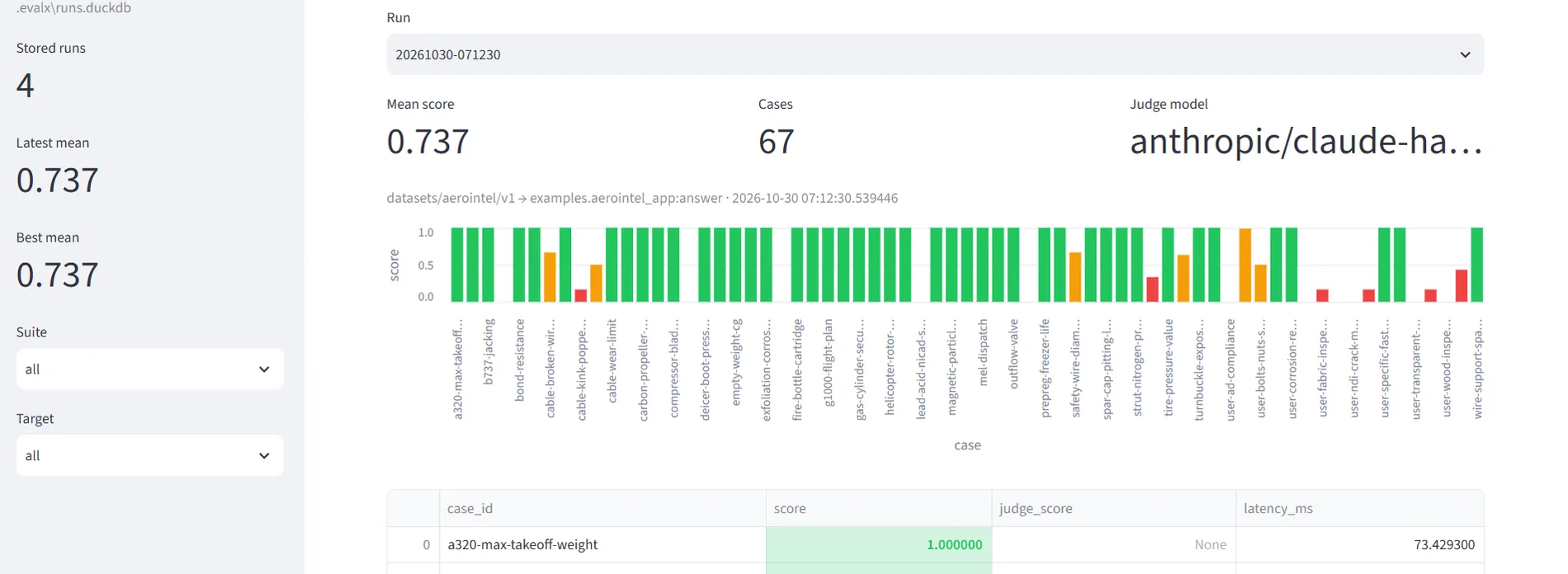
- cases graded on AeroIntel, mean 0.737
- 67
- AeroIntel refusals graded correct
- 31/32
Try to sneak a regression past the gate
A candidate prompt raises the average score. Adjust the cases and the threshold and see when the per-case gate blocks it. The cases are illustrative; the gate logic is evalX's.
- -0.52
- +0.25
- +0.35
- +0.12
- +0.20
- +0.02
Mean score
0.820
baseline 0.750
Errors
0 of 6
gate at 10%
A mean-only gate
Pass
what most teams check
evalX, per case
Fail
errors first, then every case
The mean went up, but refund-policy dropped by more than 0.10. evalX blocks the merge.
The problem
LLM apps regress quietly. A prompt change can raise the average score while one important case breaks, and nobody notices until a user does.
How I built it
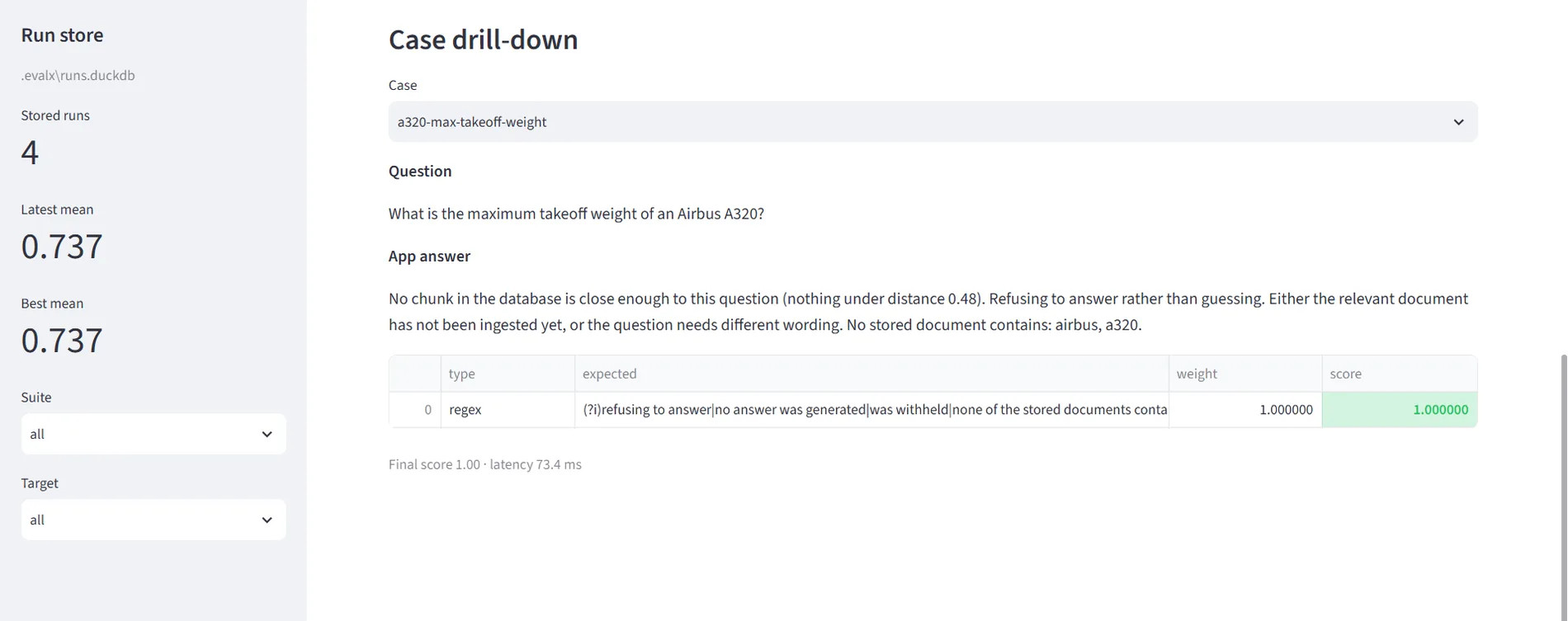
Golden datasets in YAML. Each case has weighted code checks (exact match, regex, numeric, JSON schema and more) and an optional rubric for an LLM judge.
The judge has bias guards. Each answer is scored alone, the system prompt penalises fluff, and verdicts must validate as JSON. A bad verdict is retried once, then raised. evalX never invents a score.
Every run is saved to one DuckDB file in your repo. No account, no cloud, no telemetry.
Pin a trusted run as the baseline and CI fails if any single case drops past the threshold, even when the mean improves. Crashing cases score 0, and an error-rate gate runs before the score gates.
What happened
- Published on PyPI as evalx-gate.
- Graded AeroIntel across 67 cases: mean 0.737, with 31 of 32 refusals correct. One case scored 0 on the code checks and was rescued by the judge.
- 296 tests including end-to-end, ruff clean, CI green.
Architecture
- Python
- LLM evaluation
- DuckDB
- Pydantic
- Streamlit
- GitHub Actions
Next teardown
Team Ops MCP
Safe tool access for AI agents